
Reviewed · CURACAO
Costumizable Private Jewish Heritage Tour Experience
Curaçao’s Jewish story begins in the 17th century, and this private tour connects the main surviving places in one half-day outing. You’ll see the 1732 Mikve Israel-Emanuel Synagogue, the old Beit Hayim cemetery, the Mongui Maduro Museum, and a 19th-century mansion now known for Curaçao liqueur.
I like the private format, which lets your group of up to four set the pace and ask plenty of questions. I also like the way the tour covers both Sephardic and Ashkenazi Jewish life, including the later social clubs and synagogue of Curaçao’s Ashkenazi community.
The main drawback is cost: $520 per group before admission fees is a serious outlay for one to four people. It makes the most sense for a small group that values a personal guide and convenient transportation.
Key points to know before booking
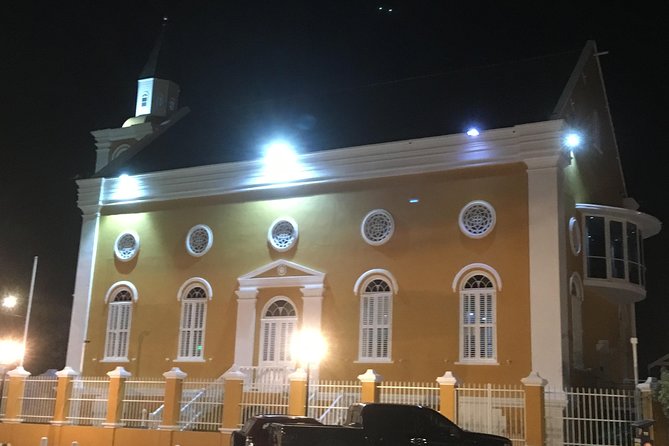
- The 1732 synagogue is the heart of the tour: Mikve Israel-Emanuel is the oldest synagogue building still standing.
- Beit Hayim dates to 1659: This is the oldest Jewish cemetery in Curaçao and the oldest in the Western Hemisphere.
- Your guide can shape the visit: The private setup allows time for questions, extra stops, and adjustments.
- Ralph Luidens is a notable guide: He is praised for clear explanations, patience, friendly service, and a spotless vehicle.
- Admission costs are separate: Plan on $18 per person for the synagogue and Jewish Museum, plus $10 per adult for Mongui Maduro.
- The tour mixes serious history with lighter stops: Landhuis Chobolobo adds a short visit to the home of Curaçao liqueur.
Why Curaçao’s Jewish story deserves a full morning
Curaçao is often sold through beaches, colorful Willemstad streets, and sunny weather. This tour shows another side of the island, one shaped by Jewish merchants, families, religious institutions, businesses, and social clubs.
The Jewish community has been part of Curaçao since 1651. That long timeline gives the outing more weight than a quick stop at a synagogue. You move between places of worship, a cemetery, a private home turned museum, and sites tied to business and social life.
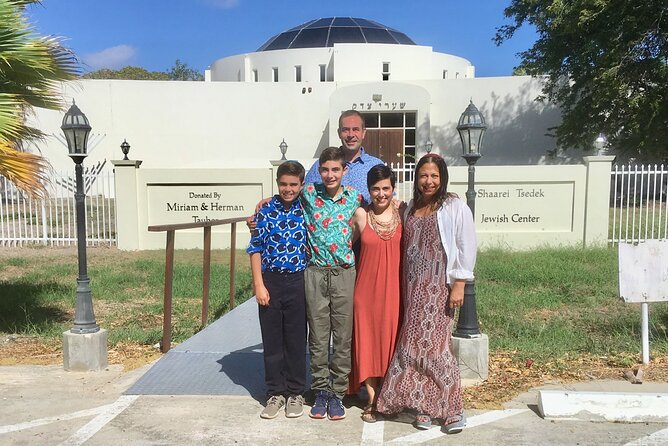
I especially appreciate that the tour does not stop with the most visible Sephardic heritage. It also explains Ashkenazi Jewish social life. In 1932, Ashkenazi Jews founded Club Union and their own sports club. A permanent synagogue came later, in 1959, called Shaarei Tsedek, or Gates of Righteousness.
That detail helps you see Jewish Curaçao as a living community with different traditions and eras, not a single story frozen in the colonial past.
The experience is private for your group only, with a maximum of four people. That matters here. Religious and family history often brings up questions, and a small group gives you room to pause instead of keeping up with a large crowd.
Other trips people book in Curacao:
- Klein Curacao Day Trip with Premium Open Bar and BBQ-Lunch
★ 4.5 · 1,302 reviews - Aquafari Tour in Curaçao
★ 5.0 · 1,240 reviews - Curacao: Swimming with Sea Turtles meets Sea turtle beach
★ 5.0 · 1,058 reviews
Starting at Mikve Israel-Emanuel and the Jewish Museum
The first stop takes about an hour and focuses on Mikve Israel-Emanuel Synagogue and the Jewish Museum of Curaçao. The synagogue was consecrated in 1732, and Mikve Israel is described as the oldest synagogue building still standing.
This is the place to spend your attention. Look beyond the age of the building and listen for the story of the people who maintained it, worshiped there, and helped shape Curaçao’s economy and public life.
The Jewish Museum adds objects and context. The tour description notes that the community’s story reaches back to 1651 and includes significant artifacts. That makes the museum useful before the later stops, since it gives you a framework for understanding the cemetery, family collections, and social institutions.
You must show a photo ID to enter the Jewish Museum Curaçao. Bring one rather than assuming a hotel card or another document will do.
Admission is not included. The listed fee for Mikve Israel-Emanuel Synagogue and the Jewish Curaçao Museum is $18 per person. Since the tour price is charged by group rather than by person, this extra amount affects the final total most for a couple or a group of four. For four adults, the listed museum and synagogue admission adds $72.
Some sites have stairs, so wear shoes you can manage comfortably. This is not presented as a strenuous outing, and most people can participate, but the buildings are historic rather than designed around modern step-free access.
Mongui Maduro Museum: family life in a plantation house
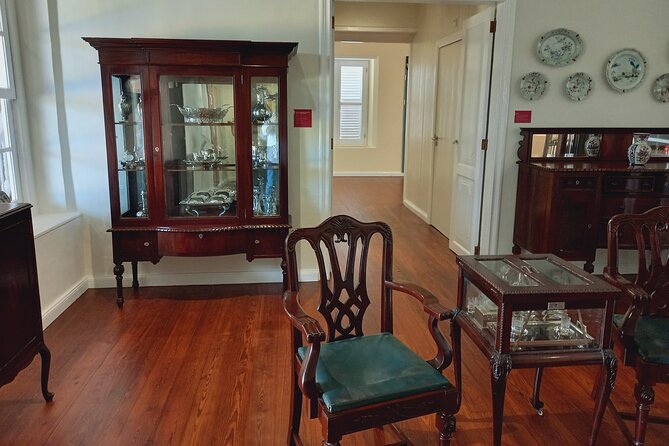
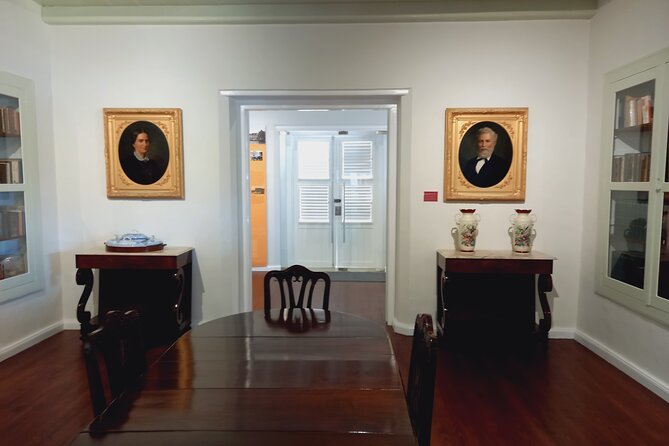
Next comes the Mongui Maduro Historic House Museum, with about 30 minutes set aside. The museum occupies Landhuis Rooi Catootje, an early 19th-century plantation house and one of Curaçao’s historical monuments.
Inside, you’ll find antique furniture and historic objects. The value here is scale. The synagogue gives you a public religious setting, while the house museum can make the past feel more domestic and personal.
The short scheduled visit should give you a focused look, but it may feel brief if you want to study every object. This is one of the places where the private format helps. If your group is deeply interested in the collection, you can ask the guide about spending more time there, subject to the day’s schedule and site hours.
Admission is separate. Adults pay $10, children ages 4 to 13 pay $9, and children ages 0 to 3 enter free. The listed local price is XCG 5.00. For a family, these rates make the museum less costly than the synagogue and Jewish Museum stop.
I would not treat Mongui Maduro as a filler stop. It adds a different kind of evidence to the day. Religious buildings tell you about institutions. A house filled with furniture and objects can help you picture the social world around them.
Beit Hayim cemetery and the oldest stones
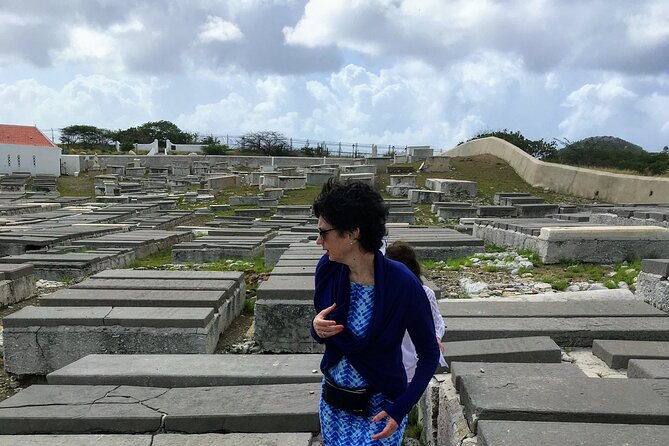
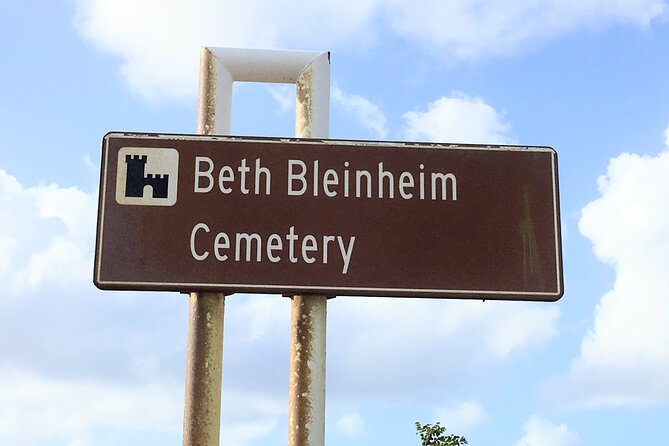
The visit to Beit Hayim Cemetery, also called Beit Hayim Blenheim, is scheduled for about 10 minutes. Admission is free.
The cemetery was consecrated in 1659 by the Mikvé Israel congregation. It is described as the oldest Jewish cemetery on Curaçao and the oldest in the Western Hemisphere.
Ten minutes is enough to make the stop meaningful, but it is not a long cemetery visit. Listen closely as your guide explains what makes the site important, then take a quiet moment to look around. The age of the cemetery links directly to the community’s arrival in the 17th century.
This stop also gives the tour a needed pause. After the museum interiors and the movement between sites, a cemetery asks for a slower response. You are not simply collecting another attraction. You are standing among the earliest physical traces of Jewish life on the island.
Because the visit is short, ask questions while you are there. A private guide can explain the connection between Beit Hayim and Mikve Israel, and can place the cemetery within the wider story of Curaçao’s Jewish community.
Same base, a different sort of day:
- Klein Curacao Adventure Day Trip
★ 4.5 · 944 reviews - Discover Diving in Curacao
★ 5.0 · 886 reviews - Curacao Helmet Diving-Walk the Ocean Floor, No Swimming Required
★ 5.0 · 761 reviews - All West Beach Hopping Tour
★ 5.0 · 594 reviews
Landhuis Chobolobo and the Curaçao liqueur stop
The final named stop is the Curaçao Liqueur Distillery at Landhuis Chobolobo. The visit is scheduled for about 15 minutes and admission is free.
Landhuis Chobolobo is a 19th-century country mansion and the home of genuine Curaçao liqueur. The distillery was established in 1896 and is one of the island’s best-known tourist attractions.
This stop changes the mood. You move from worship, family history, and burial grounds to a business and product tied to Curaçao’s identity. It also shows why the tour works better as a broad heritage outing than as a narrow synagogue visit.
Fifteen minutes is a quick look, not a full distillery program. If your main goal is liqueur tasting or production details, this tour may not provide enough time by itself. Its purpose is to place the distillery within the day’s wider story and give you a lighter final stop.
The Ashkenazi chapter and Curaçao’s business connections
The tour also includes additional points connected with Ashkenazi Jewish life and the Maduro family business story. The supplied schedule is not fully specific about the timing of these stops, so you should think of them as guide-led context rather than fixed attractions with long visits.
The Ashkenazi section is important because it broadens the picture. In 1932, the Ashkenazi community created Club Union and a sports club. Their permanent synagogue, Shaarei Tsedek, was established in 1959.
This lets you compare different chapters of Jewish life on the island. The 17th-century Sephardic presence is one part of the story. The 20th-century Ashkenazi institutions show that the community continued to change, organize, and build new places for worship and social life.
The Maduro material connects Jewish history with commerce. One reference in the tour information describes a spin-off from S.E.L. Maduro, founded in 1837. Your guide can help connect that business history with the people and institutions discussed at the museums.
This is also where the guide matters most. A string of dates can be hard to hold in your head. A good explanation links people, businesses, buildings, and community groups so the sequence makes sense.
What the private guide adds
The most praised part of this experience is the guiding. Ralph Luidens is repeatedly identified with the tour, and his approach is described as warm, patient, friendly, and very well informed. He is also noted for communicating clearly about meeting times and locations.
You should not expect a formal lecture delivered at one fixed speed. The private format allows your guide to answer questions, adjust timing, and respond to what interests you. Past outings have included side stops for shopping and gelato, showing that the schedule can bend when the day allows.
One particularly unusual possibility is meeting the Lubavitcher rabbi. That is not guaranteed by the tour description, so do not book solely for that reason. Still, it shows how a private heritage tour can sometimes connect you with present-day Jewish life, not only historic buildings.
The vehicle is described as clean and spotless, which matters in Curaçao’s warm climate. Pickup is offered from multiple departure points, including hotels, and parking fees are included. Bottled water is also provided.
The start time is 9:00 a.m., and the tour lasts about three to four hours. It ends back at the meeting point. That makes it a manageable morning activity, especially if you are staying in Willemstad or planning another afternoon outing.
Is $520 good value for your group?
The base price is $520 per group of up to four people. That means the per-person cost changes sharply depending on group size:
- One person: $520 before admission
- Two people: $260 each before admission
- Three people: about $173 each before admission
- Four people: $130 each before admission
For four people, the private rate is easier to justify. Add the listed adult admissions of $18 per person for the synagogue and Jewish Museum and $10 per person for Mongui Maduro. Four adults would pay $112 in admission, bringing the combined cost to $632 before any other personal purchases.
For two people, the tour is a luxury purchase. You are paying for privacy, pickup, a dedicated vehicle, parking, and a guide who can tailor the time. If you only want to see one synagogue and take a few photographs, this is more than you need.
If you care about Curaçao’s Jewish heritage and want the story explained across several locations, the price becomes more reasonable. The value is not in the number of stops alone. It is in having one person connect 1651, 1732, 1659, 1932, and 1959 into a clear account.
Who will get the most from this tour?
I would recommend it most strongly to couples, families, and small groups of friends with a serious interest in Jewish history, Curaçao’s development, or both.
It suits you if you want:
- A private outing rather than a fixed large-group schedule
- Hotel pickup and included parking
- A guide who can answer detailed questions
- Both Sephardic and Ashkenazi Jewish context
- A half-day activity that includes museums and historic sites
- A comfortable pace with room for adjustments
It may not suit you if you want a low-cost sightseeing tour, a long beach break, or a full distillery tasting. The cemetery visit is brief, and the liqueur stop is also short. The main subject is Jewish Curaçao, not general island sightseeing.
The experience requires good weather. If poor weather cancels the tour, you can choose another date or receive a full refund. Free cancellation is available up to 24 hours before the start time. Changes or cancellations inside that window are not accepted for a refund.
Should you book the Curaçao Jewish Heritage Tour?
Book it if you want the island’s Jewish story explained by a private guide rather than pieced together from separate visits. The strongest reasons are the 1732 synagogue, the 1659 cemetery, the Ashkenazi community story, and the chance to ask questions in a small group.
Try to fill all four places if you can. That is when the $520 group rate makes the best financial sense. Bring photo ID, budget separately for admission, and wear shoes suitable for historic buildings with some stairs.
I would skip it if your interest is only casual or if the price will distract from the day. For the right small group, though, this is a thoughtful and unusually focused way to understand how Jewish life helped shape Curaçao.
FAQ
How long does the Jewish heritage tour take?
The tour lasts approximately three to four hours.
How many people can join the private tour?
The activity is private for your group, with up to four people included in the $520 group price.
Is hotel pickup available?
Yes. Multiple departure points are available, including hotel pickup.
What time does the tour start?
The scheduled start time is 9:00 a.m.
Are entrance fees included?
No. Admission is listed separately. The combined fee for Mikve Israel-Emanuel Synagogue and the Jewish Curaçao Museum is $18 per person. Mongui Maduro Historic House Museum costs $10 per adult, $9 for children ages 4 to 13, and is free for children ages 0 to 3.
Do I need identification?
Yes. Participants must show photo ID to enter the Jewish Museum Curaçao.
What happens if bad weather cancels the tour?
You will be offered a different date or a full refund. Free cancellation is also available up to 24 hours before the experience starts.
Just added in Curacao
- Private Photoshoot Curacao – Capture Your Memories in Willemstad★ 5.0 · 36 reviews
- West Coast Full-Day Tour with Beaches, BBQ and Blue Room★ 4.5 · 209 reviews
- Turtle Swim at TurtleBay visit Flamingos & KnipBeach Safari Truck★ 3.5 · 35 reviews
- TukTuk’s Adventure Fun Tour in Curaçao★ 4.0 · 92 reviews
- UTV Buggy and Snorkeling Tour in Willemstad Curacao★ 5.0 · 38 reviews
- Unique Private Experiences Tour in Curacao★ 5.0 · 32 reviews
- 2-Hour TukTuk Rental with an Experienced Guide and Driver★ 4.5 · 237 reviews
- Splashy Iguana Tour in Curacao★ 5.0 · 113 reviews
Curacao, compared.
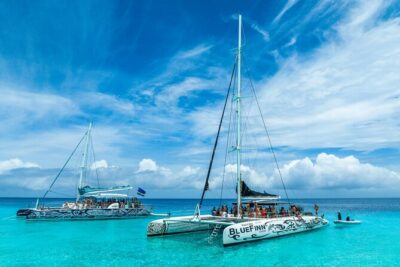
Klein Curacao Day Trip with Premium Open Bar and BBQ-Lunch
Read our review →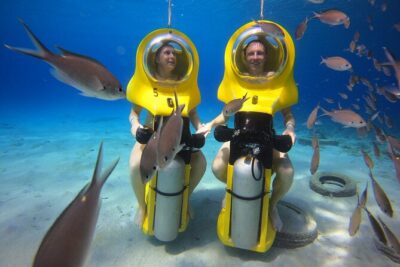

Swimming with Sea Turtles meets Sea turtle beach
Read our review →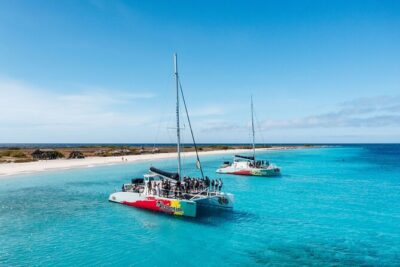
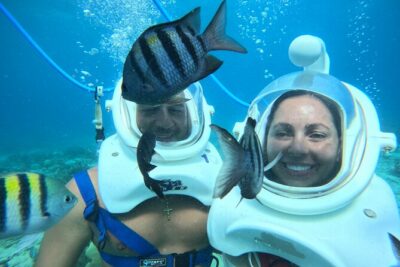
Curacao Helmet Diving-Walk the Ocean Floor, No Swimming Required
Read our review →

Browse the lists this tour appears in