
Reviewed · ARUBA
Small-Group Aruba Scuba Diving for Non-Certified Divers
Aruba makes it easy to try scuba without first earning a certification. You begin with a 30-minute land lesson, practice mask and breathing skills in shallow water, then move to a calm reef setting at Tres Trapi or Mangel Halto. With no more than two beginners per instructor, the pace can stay personal and reassuring.
I like the shore entry, which removes the stress of boarding a boat, and I like the chance to see turtles, eels, pufferfish, schools of tropical fish, and coral close to shore. The main drawback is that the experience is intentionally shallow and beginner-friendly, so strong swimmers or certified divers may want a longer or more adventurous outing.
Key points to know before booking
- Beginner-friendly instruction: You learn the basic theory and underwater skills before entering deeper water.
- Small groups: The maximum group size is four, with a limit of two non-certified participants per instructor.
- Shore-based access: The session begins from Tres Trapi or Mangel Halto rather than from a boat.
- Likely underwater time: Many participants spend roughly 45 minutes in the water, depending on air use and comfort.
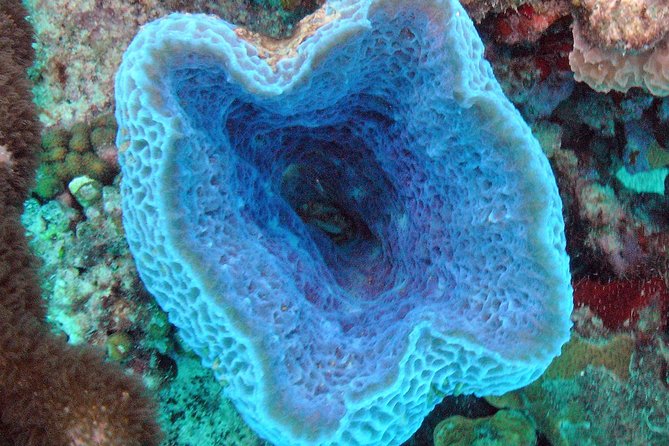
- Marine life: Turtles, eels, pufferfish, octopuses, schools of fish, and coral are possible sightings.
- Important health check: Review the PADI or SDI medical questionnaire before booking, especially if you answer yes to any medical question.
Why this Aruba experience works for first-timers
The best feature here is the gradual start. You do not walk onto a beach, put on a tank, and immediately head into open water. At about 2 pm, your instructor first explains how the equipment works, how to breathe through the regulator, how to clear a mask, and how to equalize your ears.
That first lesson takes around 30 minutes. It may sound basic, but it is the part that helps you relax later. Underwater communication is limited, so knowing the hand signals and practicing the main skills ahead of time matters.
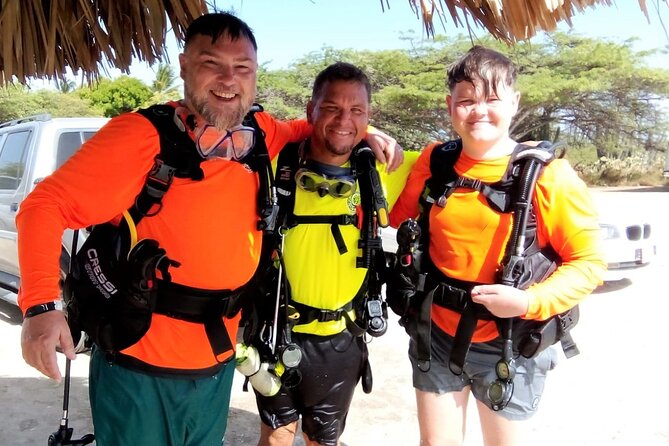
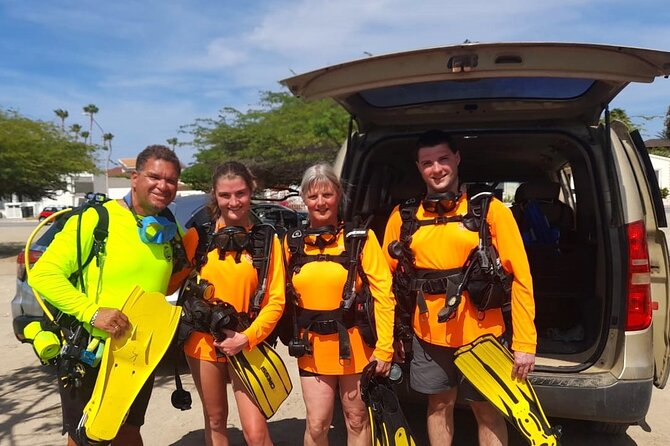
You then receive a BCD, regulator, weights, tank, mask, and fins. If you have a mask and fins that fit you well, you can bring and use your own. That small option is useful because a comfortable mask can make it easier to stay calm and keep your attention on the reef.
The first water work takes place in the shallows. You practice the techniques from the briefing while your instructor watches closely. If you are comfortable, the group moves into deeper water. If you are nervous, you are not expected to force the issue. One participant stayed shallow while a companion continued farther out, and another decided to snorkel above the group instead of going all the way down.
That flexibility is important. Your first underwater experience should not feel like a test you can fail.
Other dives booked in Aruba:
- Aruba 2-Tank Dive Excursion for Certified Divers
★ 4.5 · 230 reviews - Aruba One or Two Tank Scuba Dive
★ 4.5 · 195 reviews - Private First-Time Dive on Aruba’s Reef and Wreck Site
★ 5.0 · 192 reviews
Tres Trapi and Mangel Halto: two shore-based settings
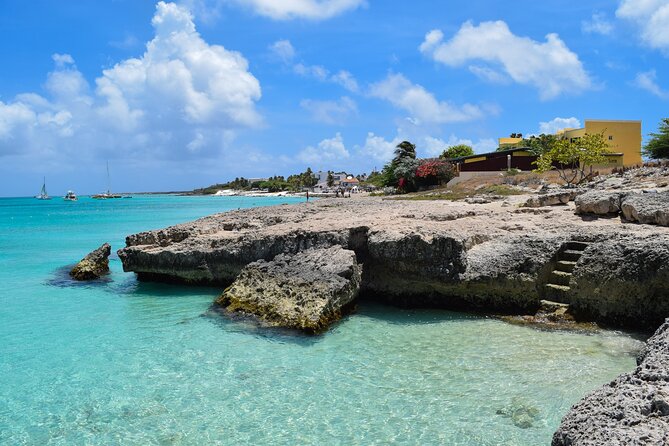
The session takes place at Tres Trapi or Mangel Halto. Tres Trapi is the named meeting location, at L. G. Smith Boulevard 105 in Noord, and it is also the site most often associated with this beginner experience.
Tres Trapi is used because the water is shallow and the entry is manageable for people who are still learning. It also offers more than a bare introduction. You might see schools of tropical fish, turtles, eels, pufferfish, octopuses, and coral formations. One participant described following a turtle, while another noticed hawksbill turtles feeding on seaweed.
Mangel Halto is the alternate location. The exact site depends on conditions and the day’s arrangements. You should not book this expecting a particular animal or a guaranteed coral wall, since marine life and water clarity change with weather and sea conditions.
The shore entry is both a strength and a limitation. It keeps the outing simple and avoids the motion, boarding time, and extra expense that can come with a boat trip. On the other hand, you may not reach the dramatic offshore sites associated with certified scuba excursions.
One person who had previously gone out by boat expected the shore format to feel less special. Once in the water, that concern disappeared. Still, if your priority is depth, wrecks, or a longer trip far from shore, this is not the right product.
What the 30-minute briefing really gives you
The briefing is not just a quick safety talk. It gives you the basic tools for managing the most common beginner problems.
You will need to breathe slowly through the regulator, clear your mask if water enters it, and equalize your ears as you descend. These tasks can feel awkward at first, especially if you are anxious about the sea. Practicing in shallow water lets you stop, ask questions, and reset without pressure.
The instructors work with PADI and SDI standards. Names that appear in the instructor team include Alonso, Alvaro, Steve, Jay, and Michel. Your assigned instructor can vary, but the repeated emphasis is on patience, clear coaching, and frequent checks underwater.
That personal attention is possible because the group is capped at four people. The instructor-to-student ratio is no more than one instructor for two non-certified participants. For a first attempt, this matters more than a large boat, a fancy lunch, or a long itinerary.
If you struggle with your mask or feel uneasy in deeper water, tell the instructor right away. The format allows the session to slow down. You can remain in shallower water, and the instructor can stay with you rather than pushing you toward a depth that feels wrong.
Equipment, comfort, and the shore entry
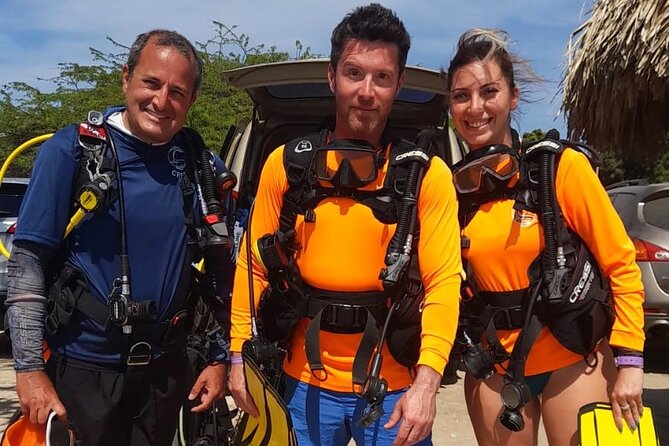
The operator provides the essential gear: BCD, regulator, weights, tank, mask, and fins. You are welcome to bring your own mask and fins if you prefer.
The BCD helps you manage buoyancy, while the regulator supplies air from the tank. Your instructor handles the fitting and explains what each item does. For most people, the equipment is unfamiliar at first, so give yourself time to adjust before heading out.
The shore-based format also makes the experience less complicated. You do not need to climb a boat ladder at the end, and you are not committed to a full boat excursion if you decide the activity is not for you. You begin and end at the meeting point.
That said, entering from shore can require a walk through shallow water while wearing equipment. The provided information does not give a detailed description of the entry surface, so ask the operator about current conditions if footing is a concern.
Pickup is offered from Palm and Eagle resorts, Harbor House, and Renaissance resorts. Cruise passengers can meet at the Citgo gas station opposite the cruise terminal exit. If you are not using pickup, the listed start point is Tres Trapi Beach, with a 2 pm start.
Same base, a different sort of day:
- Ultimate Island Jeep Safari with Natural Pool, Baby Beach & Lunch
★ 5.0 · 8,653 reviews - Aruba UTV, ATV Adventure to Secret Beach and Cave Pool
★ 5.0 · 7,730 reviews - Aruba Natural Pool and Indian Cave Rugged Jeep Safari
★ 5.0 · 7,713 reviews - ThrillSeekers: Aruba UTV Tour & Cliff Jump at Natural Pool
★ 5.0 · 5,733 reviews
How long you stay underwater
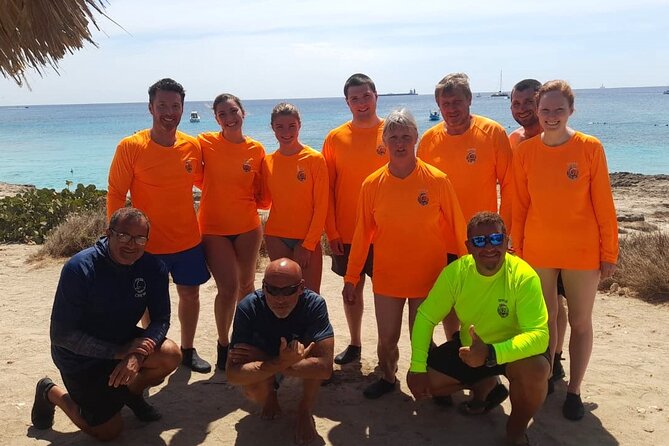
The stated activity length is about two hours. That includes the briefing, equipment setup, shallow-water practice, and the main underwater session.
Your actual time below the surface depends on how much air you use and how comfortable you become. The operator’s experience is that non-certified participants often remain in the water for about 45 minutes. Tanks are not used until completely empty, so the underwater portion ends before the air supply reaches zero.
This is a useful expectation to set before booking. Some people finish and wish the session had lasted longer. If you breathe quickly because you are tense, your time may be shorter. As you relax and control your breathing, you may use air more slowly.
The experience is therefore not a fixed 45-minute tour with a guaranteed route. It is a supervised introduction, adjusted to your comfort, air use, and conditions.
What marine life you might see
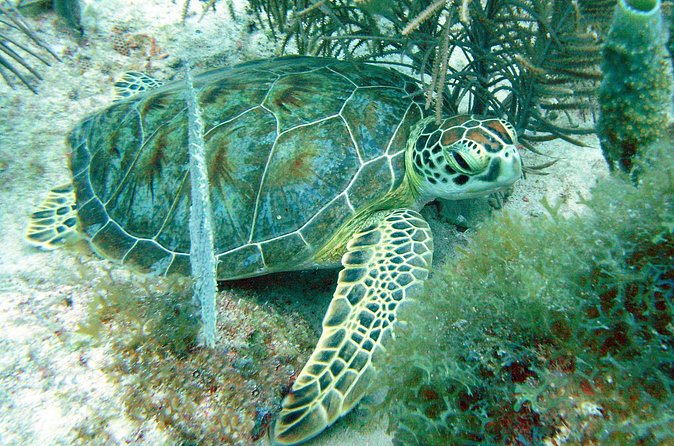
Tres Trapi can provide a strong first look at Aruba’s underwater life without requiring an advanced qualification. You might encounter colorful fish moving in schools, eels tucked into reef spaces, pufferfish, octopuses, and turtles.
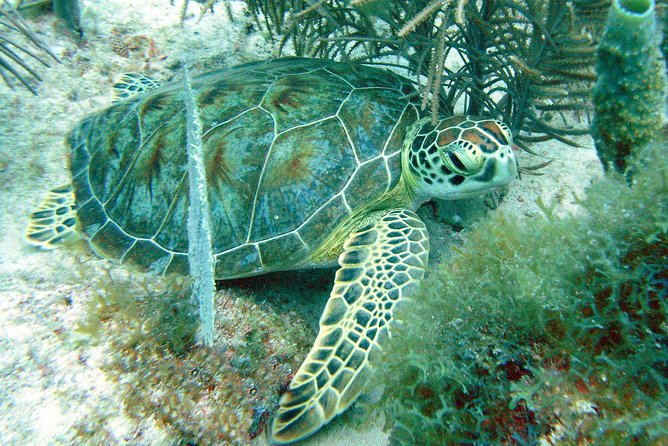
Turtles are the standout possibility. Several participants saw them, including hawksbill turtles feeding near the bottom. One person followed a turtle for a short time, while another saw two turtles during the session.
You could also see flying fish, coral formations, and a broad mix of smaller reef animals. None of these sightings is guaranteed, and visibility can change. One participant encountered murkier water due to weather, even though the overall experience remained worthwhile.
The setting may not produce the dramatic scale of a remote reef, but it gives you enough to understand why people become interested in scuba. You can see the island from below, move slowly through the water, and observe animals that are easy to miss while swimming at the surface.
Is $114 a fair price?
At $114 per person, this is not the cheapest water activity in Aruba. Snorkeling usually costs less, and you can often enter the sea without special equipment or instruction.
But this price includes the parts that make a first scuba attempt possible: instruction, equipment, tank, a small group, and close supervision. You are paying for a controlled introduction rather than simply access to the water.
The one extra charge is a BBO fee of $7 per person. Add that to the advertised price when comparing options. Pickup is included from the listed resorts and the cruise-terminal meeting point, which can improve the value if you would otherwise need a taxi.
I think the price is reasonable if you have always wanted to try scuba but do not want to commit to a certification course. It is less compelling if you already hold certification or mainly want a long, deep, boat-based session.
Medical rules you should take seriously
Before booking, search for the PADI Discover Scuba Diving or SDI Discovery Dive medical questionnaire. The operator specifically advises you to check it before making a reservation.
A yes answer does not automatically mean you cannot participate, but you may need written permission from a doctor. Bring that permission with you if it applies.
You should not take part if you have a heart problem, are under the influence of alcohol or drugs, or have medical concerns involving your respiratory or circulatory systems. The program also requires you to be in reasonable physical condition. Scuba can be strenuous, and all body air spaces need to be healthy.
This is not paperwork to ignore until arrival. One person was unable to participate after the medical questionnaire raised a concern and was uncertain about receiving a refund. Check first, then book.
The minimum age is 10. The information says most people can participate, but your health and comfort remain the deciding factors.
Who should book this experience?
I would choose this for a first-time participant who wants personal instruction and a short, shore-based introduction. It suits couples, families with children age 10 or older, and friends where one person is confident and the other is nervous.
It is also a good match if you are curious about certification but do not yet want to commit to a course. A successful session can show you whether breathing underwater feels natural enough to pursue an open-water qualification later.
You should think twice if you dislike being in the sea, have medical concerns, want a guaranteed deep site, or need a boat excursion with a longer route. Certified divers may also find the depth and beginner pace too limited.
The experience does work for mixed-confidence groups. One person can continue farther while another stays shallow, provided the instructor can supervise everyone safely. Tell the team what you need instead of trying to keep up.
Booking, cancellations, and the no-fly rule
You can cancel up to 24 hours before the 2 pm start for a full refund. Changes or cancellations made less than 24 hours before the activity are not accepted for a refund.
The activity depends on good weather. If poor conditions cause cancellation, you are offered another date or a full refund.
Plan your departure carefully. You are not allowed to fly for at least 18 hours after scuba. Do not schedule this on the final afternoon before a flight, even if the timing looks convenient.
Should you book the Aruba beginner scuba session?
Book it if you want a careful first step, a small group, and a realistic chance to see turtles and reef life without boarding a boat. The patient approach, shallow practice area, and one-instructor-for-two beginners ratio are the real value here.
Skip it if your main goal is depth, wrecks, or a full day on the water. Also check the medical questionnaire before paying, and leave at least 18 hours between the session and any flight.
For a nervous beginner, this is a sensible way to test scuba in Aruba. You get enough time underwater to decide if the sport is for you, without taking on the cost and commitment of certification.
FAQ
Where does the Aruba scuba experience start?
The listed meeting point is Tres Trapi Beach at L. G. Smith Boulevard 105 in Noord, Aruba. The activity may take place at Tres Trapi or Mangel Halto.
What time does the activity start?
The start time is 2 pm.
How long does the experience last?
The full activity lasts about two hours. The underwater portion often lasts around 45 minutes, depending on air use and comfort.
How many people can join?
The maximum group size is four participants. For non-certified participants, there are no more than two divers per instructor.
What equipment is included?
The operator provides a BCD, regulator, weights, tank, mask, and fins. You may use your own mask and fins if you prefer.
Is hotel pickup available?
Pickup is offered from Palm and Eagle resorts, Harbor House, and Renaissance resorts. Cruise passengers can meet at the Citgo gas station opposite the cruise terminal exit.
What is the minimum age?
The minimum age is 10 years.
Is there an extra fee?
A BBO fee of $7 per person is not included in the listed price of $114 per person.
Can I fly after the activity?
You must wait at least 18 hours after scuba before flying. Plan the activity accordingly.
Just added in Aruba
- UTV and Jeep Island Adventure Mix Up★ 5.0 · 73 reviews
- The Whole Story Tour + A Ride★ 5.0 · 141 reviews
- Private Tour: Essential Tour of Aruba★ 5.0 · 68 reviews
- Arubabound Transfers★ 5.0 · 31 reviews
- Made in Aruba Sightseeing Tour★ 5.0 · 252 reviews
- Round Trip Shared Airport Shuttle★ 4.5 · 282 reviews
- Aruba Private Luxury Boat Tours – Sail, Snorkel, Fishing and More★ 4.5 · 81 reviews
- Private Round – Trip Airport Transfer in Aruba Luxury SUV★ 5.0 · 120 reviews
Aruba, compared.
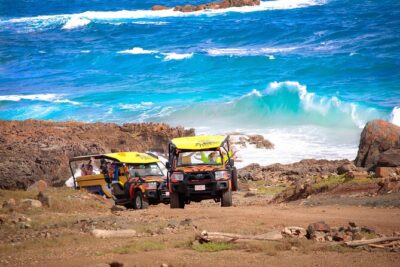
Ultimate Island Jeep Safari with Natural Pool, Baby Beach & Lunch
Read our review →

Aruba Natural Pool and Indian Cave Rugged Jeep Safari
Read our review →
ThrillSeekers: Aruba UTV Tour & Cliff Jump at Natural Pool
Read our review →

Aruba UTV Tour with Natural Cave Pool and Cliff Jumping
Read our review →
Arusun Catamaran Sail with Snorkeling in Aruba
Read our review →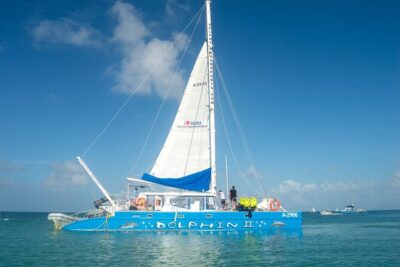
Dolphin Catamaran Snorkel and Sail with Open Bar
Read our review →Browse the lists this tour appears in